Auctions
Artists
Catalog
Picture Framing
News
Contact
+48 606 613 435 0 PLNNEW GALLERY ADDRESS! ul. Bociania 28/29, 02-807 Warsaw, Poland
Hotline / Advisor: +48 606 613 435
Auctions
Artists
Catalog
Picture Framing
News
Contact
+48 606 613 435 0 PLN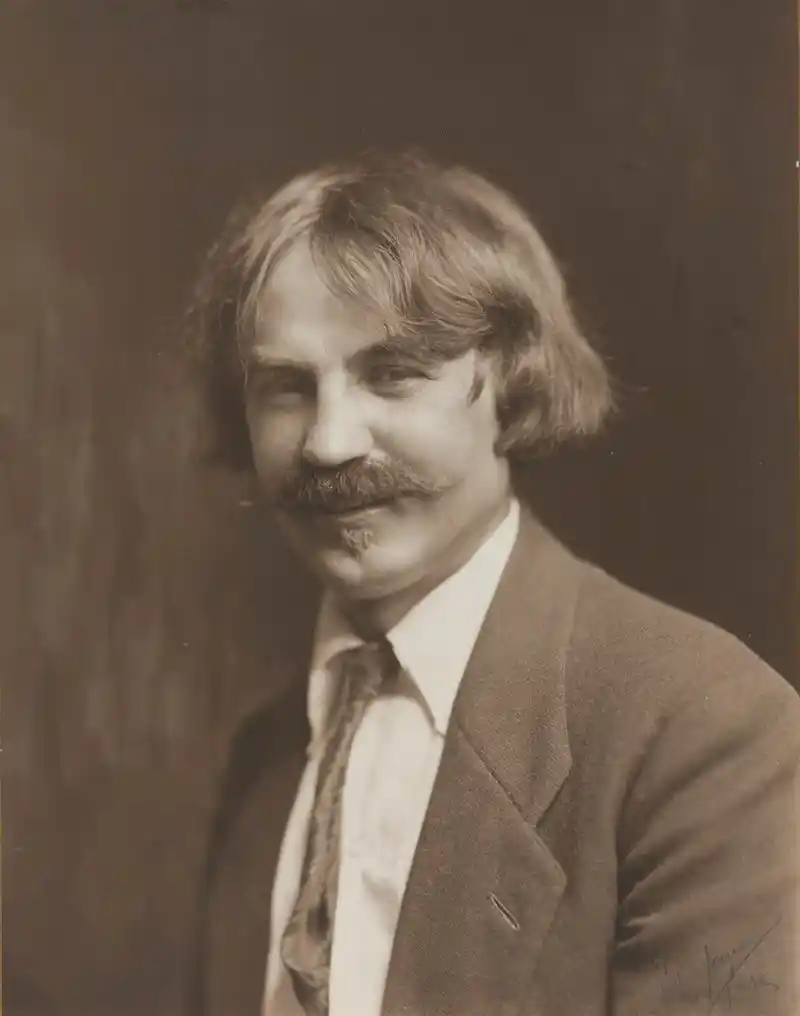
Bolesław BIEGAS (1877 - 1954) Bolesław Biegas, originally Bolesław Biegalski (born 29 March 1877 in Koziczyn near Ciechanów, died 30 September 1954 in Paris) — a Polish sculptor, painter, and dramatist. One of the most original Polish sculptors who settled in Paris. Born into a peasant family, he began studying sculpture in 1895–1896 thanks to the support of the priest Aleksander Rzewnicki; he took lessons from the sculptor-woodcarver Antoni Panasiuk, who ran a studio for church art in Warsaw. He broadened his workshop skills by studying from 1897 to 1901 at the Kraków Academy of Fine Arts under Alfred Daun and Konstanty Laszczka. In 1901 he was expelled from the university for a sculpture titled The Book of Life, which had been surrounded by an atmosphere of scandal. In the same year he took part in the Xth Vienna Exhibition of Secession. With a Warsaw scholarship from the Society of Encouragement of Fine Arts, he went to Paris, where—interrupted only by trips back to the country—he remained for the rest of his life. Initially, he continued his studies at the École des Beaux-Arts, but soon began working independently. He took part in the Salon des Indépendants (1906–1910, 1920–1923, 1925), Salon d'Automne (1910, 1913, 1919) and Salon Société Nationale des Beaux-Arts (1902, 1908, 1913, 1926, 1927). Solo exhibitions of the artist were held at the Parisian Galerie A. Seligmann (1911, 1925), Galerie Bernheim-Jeune (1929) and Galerie Arts et Artistes Polonais (1932), as well as at the Arlington Gallery in London (1930). From 1902 he presented his work within the circle of the Parisian magazine “La Plume”. He also showed his works in Saint Petersburg (1903), Kyiv (1905), Rome (1911) and Amsterdam (1911). He began painting around 1900 on the advice of Stanisław Wyspiański. He drew inspiration from the symbolist art of G. Moreau and A. Böcklin; the artist’s early works also reflect a fascination with Wyspiański’s art and the decorative quality of the undulating, flexible line characteristic of the Secession period (ADAM, c. 1907). He introduced an original approach to depicting images through his “spherical portraits”, an attempt to harmoniously combine a stylised likeness of the human figure with abstract ornamentation, placing the human figure within a dense lattice of lines running along arcs and intersecting planes (“Souvenir”). In the early years of the 1920s, Biegas created a cycle of twenty-eight oil paintings of an oneiric character and with erotic undertones, entitled “The Mysticism of Infinity”, which he presented in 1925 at the Galerie André Seligmann in Paris. A continuation of “The Mysticism of Infinity” was the series “Famous People” from the 1930s, depicting imaginative portraits of major cultural figures in a nocturnal setting, including Shakespeare (“Shake(s)pir”, c. 1930), Byron, Shelley, Milton, Walter Scott, Oscar Wilde, and Chopin.
This store uses cookies for analytical and functional purposes. Please accept our privacy policy to enjoy all features of the website.