Auctions
Artists
Catalog
Picture Framing
News
Contact
+48 606 613 435 0 PLNNEW GALLERY ADDRESS! ul. Bociania 28/29, 02-807 Warsaw, Poland
Hotline / Advisor: +48 606 613 435
Auctions
Artists
Catalog
Picture Framing
News
Contact
+48 606 613 435 0 PLN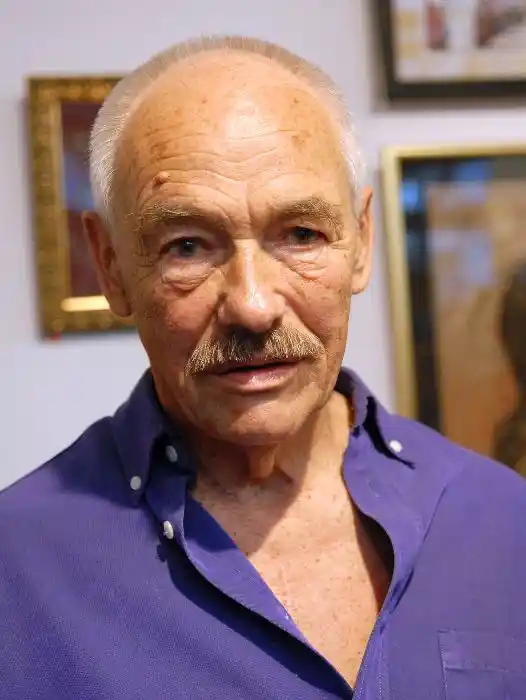
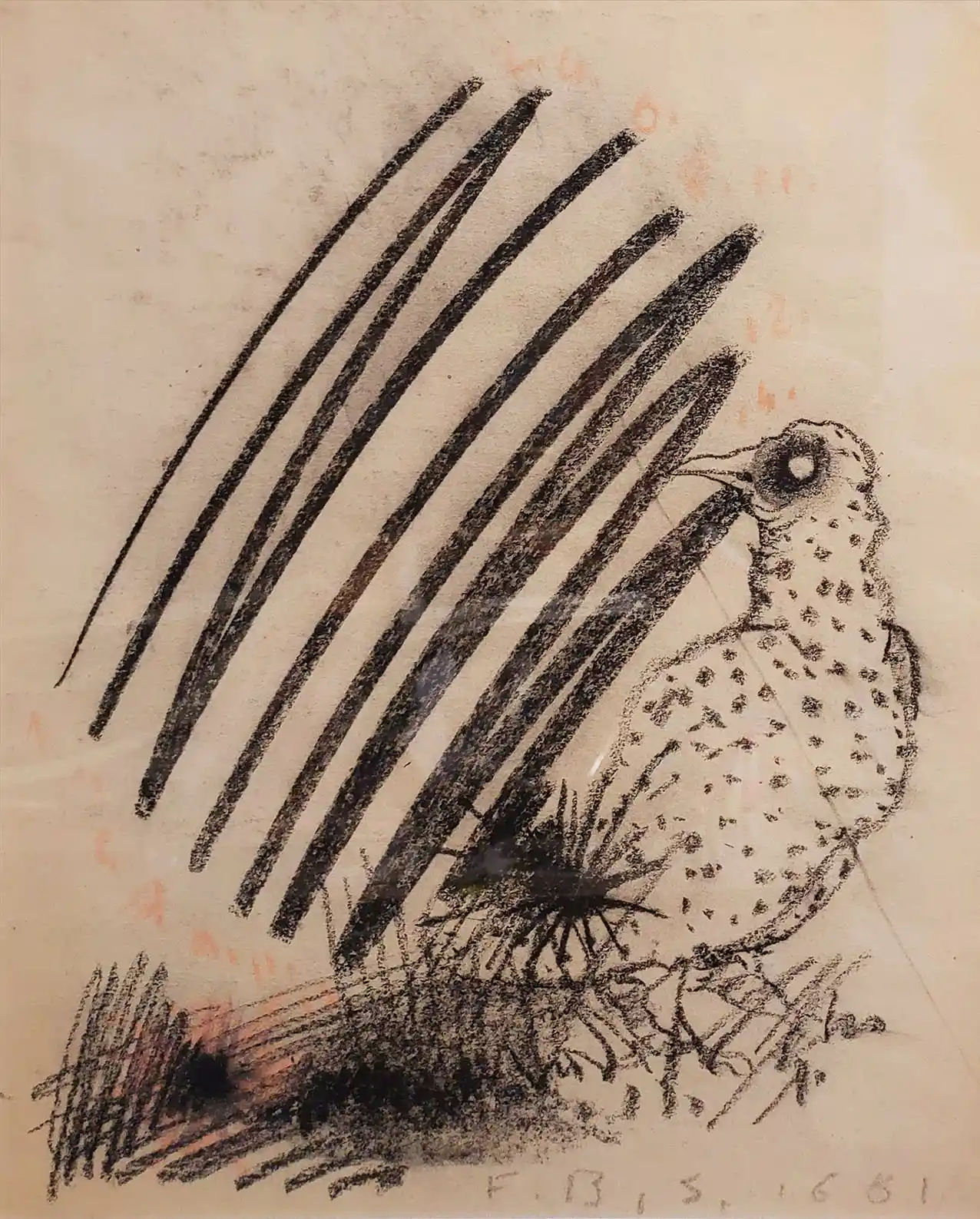
He came from a noble family bearing the Biberstein coat of arms. He was the brother of Father Marek Starowieyski. He was married to Ewa Starowieyska (1930–2012), a well-known stage designer. His son is the painter and draughtsman Antoni Starowieyski (b. 1973). Between 1949 and 1952, he studied painting at the Academy of Fine Arts in Kraków under Wojciech Weiss and Adam Marczyński, and then at the ASP in Warsaw under Michał Bylina, where he obtained his diploma in 1955. He gained popularity in the 1960s through a series of theatrical and film posters. He worked in painting, posters, applied graphics, and theatrical and television stage design. He was the creator of the so-called “theatre of drawing” (teatr rysowania). His painting was marked by a fascination with the female body with Rubens-like forms, sensuality, and reflection on transience and death. He exhibited repeatedly in galleries and museums in Poland and Austria, Belgium, France, the Netherlands, Canada, Switzerland, the USA, Italy, and elsewhere. He was the recipient of numerous awards, including: the Grand Prix at the Biennale of Contemporary Art in Saô Paulo (1973), the Grand Prix for a film poster at the Cannes festival (1974), the Grand Prix at the International Festival in Paris (1975), the Annual Key Award by the Hollywood Reporter newspaper (1975–1976), as well as awards at the International Poster Biennale in Warsaw and the International Film Festival in Chicago (1979–1982). In his “theatres of drawing,” he combined both arts into a single “spectacle of all kinds of art”—a media phenomenon in which artistic value lay to an equal extent in the act of creation itself, its show elements, and—thanks to the author’s erudition—its literary dimension, as well as in the work itself in the traditional sense of the word. In Starowieyski’s paintings, the real world would merge with the products of his almost “unrestrained” imagination, and his oeuvre openly referred to the old masters of the 17th century, being steeped in grotesque and humour. The painting Divina Polonia Rapta Per Europa Profana, meaning: “Divine Poland abducted by secular Europe,” exhibited at the Polish representation in the European Union in Brussels (1998), provoked many controversial opinions. In 1994, he received the “Golden Mask” Award for stage design for the comedy-drama Ubu Roi—Krzysztof Penderecki’s The King Ubu—or The Poles, at the Teatr Wielki in Łódź, and in 2004 he received the Minister of Culture’s Award in the field of visual arts. In 2005, he was awarded the Gold Medal for Merit to Culture Gloria Artis by the Minister of Culture Waldemar Dąbrowski. He died on 23 February 2009 at the age of 79. He is buried in the cemetery in Laski, near Warsaw.
This store uses cookies for analytical and functional purposes. Please accept our privacy policy to enjoy all features of the website.